.png?width=1958&height=557&name=TerraBella%20Southern%20Pines-Horizontal%20(1).png)

Summary
Effective memory care programs in North Carolina focus on much more than assistance with daily tasks—they create environments, routines, and meaningful experiences that support dignity and help residents living with dementia feel known and understood.
- Person-centered care planning that honors each resident's life history, preferences, and interests shapes daily interactions and adapts as needs change
- Specialized training equips care team members to recognize nonverbal cues, respond with patience, and use validation and gentle redirection during moments of confusion
- Purposeful environmental design—including secure spaces, clear pathways, calming common areas, and safe outdoor access—helps residents move through the day with less stress and more confidence
- Engaging daily programs offer flexible, meaningful activities like music, art, reminiscence, and small-group experiences that meet residents where they are without pressure
- Family involvement and comprehensive health support, including wellness checks and coordinated care, help create predictable routines and keep loved ones informed as needs evolve
When a family member receives a dementia diagnosis, finding the right support becomes a priority. Understanding what makes a good memory care community can help families look beyond a list of services and focus on the daily experience, the care approach, and the environment their loved one will call home.
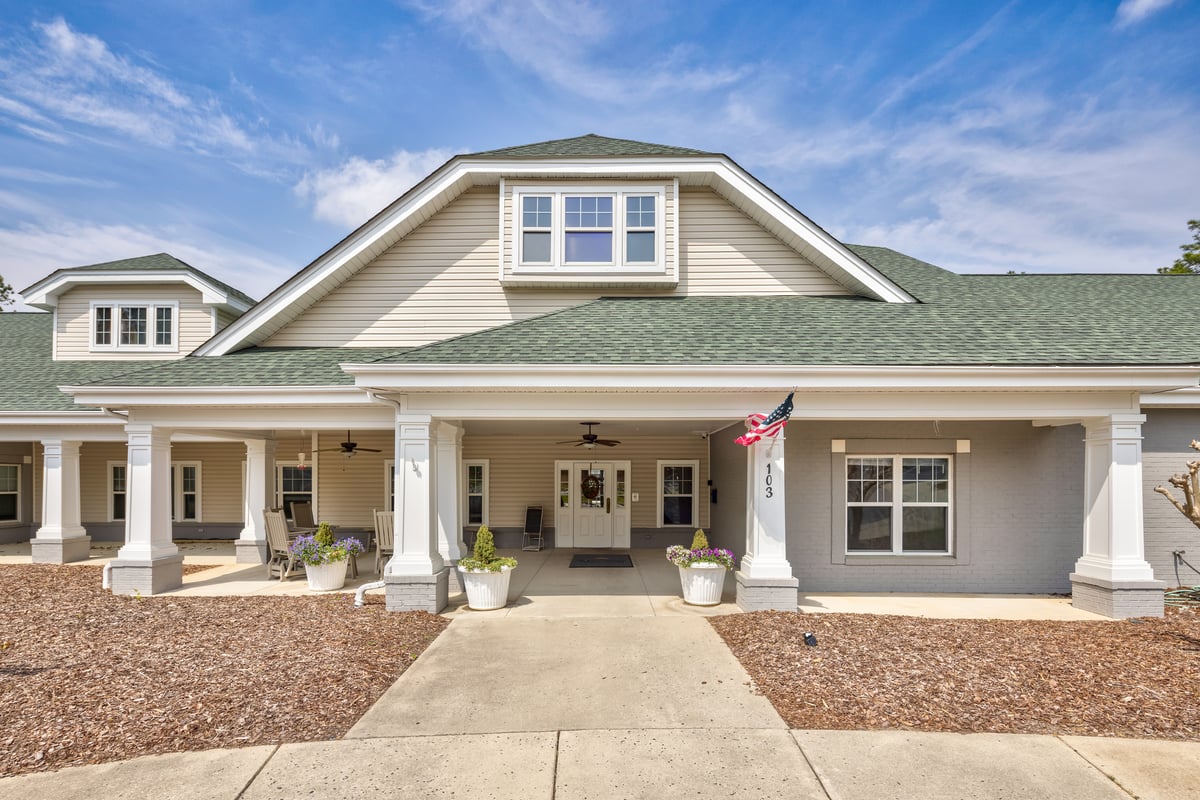
Dementia programs that work go beyond basic assistance with daily tasks. They create routines, spaces, and meaningful moments designed to reduce confusion, support dignity, and help residents living with dementia feel known. At TerraBella Southern Pines, families can find Assisted Living and SHINE® Memory Care in two separate buildings, each focused around the needs of the residents who live there.
Person-Centered Care Planning
The foundation of effective memory care programs in North Carolina begins with understanding each resident as an individual. Team members take time to learn about personal histories, preferences, lifelong interests, familiar routines, and the small details that bring comfort.
That information shapes daily interactions and programs. A resident who once taught music may respond to familiar songs. Someone who loved gardening may enjoy time in the private courtyard and community garden. These personal connections help make each day feel more familiar and purposeful.
Personalized care plans also need to evolve. Regular wellness checks help the care team adjust support while respecting each person’s abilities, comfort level, and routine. This flexible approach recognizes that Alzheimer’s disease and other forms of dementia progress differently for every person.
Specialized Training for Care Teams
Specialized memory care approaches depend on team members who understand the realities of memory loss. Strong programs include ongoing education on Alzheimer’s disease, dementia-related communication, redirection, and ways to help reduce anxiety.
Training matters because residents may not always be able to clearly explain what they need. Care partners learn how to recognize nonverbal cues, respond with patience, and create calm, reassuring interactions throughout the day.
Important training areas often include:
- Recognizing changes in mood, appetite, or behavior
- Using validation and gentle redirection
- Supporting residents during moments of confusion
- Turning daily assistance into respectful, relationship-based support
- Communicating with families about changes and meaningful moments
At TerraBella Southern Pines, SHINE® Memory Care provides a structured, science-based approach recognized by the Alzheimer’s Association®. That framework supports personalized attention while helping team members create daily experiences rooted in dignity and understanding.
Purposeful Environmental Design
One of the most important quality indicators for a memory care neighborhood is the physical environment. Thoughtful design can help residents move through the day with less stress and more confidence.
A strong memory care setting should feel secure without feeling restrictive. It should also support comfort, recognition, and routine. At TerraBella Southern Pines, Memory Care is offered in a separate setting from Assisted Living, giving residents a more focused environment designed around their needs.
Helpful design features may include:
- Secure spaces that help reduce wandering concerns
- Clear paths and familiar visual cues
- Calming common areas for meals, visits, and programs
- Outdoor areas where residents can enjoy fresh air safely
- Apartment homes or suites that support comfort and personal familiarity
Southern Pines also offers a naturally calming backdrop. Known for its Carolina Sandhills setting, equestrian culture, nearby golf courses, and walkable downtown, the area gives families a peaceful place to visit and stay connected.
Engaging Daily Programs and Enrichment
Memory care programming for Alzheimer’s should meet residents where they are. The goal is not to keep people busy for the sake of a full calendar. The goal is to offer moments that feel familiar, meaningful, and achievable.
Programs may include music, art, gentle movement, sensory engagement, reminiscence, spiritual connection, and small-group experiences. At TerraBella Southern Pines, the Celebrations calendar includes live entertainment, sing-alongs, happy hours, bingo, movies, word games, and other planned events that can be adapted to different interests and abilities.
The most effective dementia programs that work usually share a few qualities:
- They are flexible instead of one-size-fits-all.
- They offer choice without overwhelming residents.
- They encourage participation without pressure.
- They focus on connection more than completion.
- They leave room for quiet moments and one-on-one support.
Small-group settings can be especially helpful because they allow residents to take part without feeling overstimulated. For some residents, a familiar song or a simple hands-on task may be more meaningful than a large event.
Dining That Supports Comfort and Routine
Meals are an important part of memory care because they support nutrition, routine, and social connection. As dementia progresses, residents may experience changes in appetite, attention, preferences, or comfort with certain foods.
At TerraBella Southern Pines, Sensations dining offers chef-prepared meals in a restaurant-style setting with tableside service. The community also provides three meals per day plus snacks, giving residents familiar structure throughout the day.
Dining support in memory care may include gentle cues, modified options when needed, and a calm setting that helps residents focus on the meal. A thoughtful dining experience can help protect dignity while making mealtimes more enjoyable.
Family Involvement and Support
Families are an essential part of memory care. A good memory care community keeps loved ones informed, welcomes communication, and helps families understand what to expect as needs change.
Support may include regular updates, educational conversations, and invitations to share information about a resident’s history, preferences, routines, and favorite pastimes. These details help the care team create more personal daily experiences.
Families should feel comfortable asking questions such as:
- How do you get to know each resident’s life story?
- How are programs adapted as needs change?
- What training do team members receive?
- How do you communicate changes with families?
- What safety-enhanced features are part of the memory care neighborhood?
These questions can help families identify quality indicators in a memory care neighborhood and better understand whether the environment feels right for their loved one.
Comprehensive Health and Daily Support
Quality memory care includes coordinated support from trained professionals who understand dementia-related needs. Regular wellness checks can help identify discomfort, illness, or changes in routine that a resident may not be able to explain clearly.
Medication management, nutritious meals, assistance with personal routines, housekeeping, laundry, and transportation all play a role in supporting daily life. At TerraBella Southern Pines, services such as Impressions housekeeping and complimentary transportation help simplify daily responsibilities, while programs and amenities offer residents more opportunities for connection.
For residents living with Alzheimer’s or another form of dementia, this type of structure can make the day feel more predictable. For families, it can offer reassurance that support is available in a setting designed around memory care needs.
FAQ: What Families Should Know About Memory Care
What Makes a Good Memory Care Community?
A good memory care community combines trained team members, personalized care planning, secure and supportive spaces, meaningful programs, family communication, and daily routines that respect each resident’s dignity.
What Are Signs of Effective Memory Care Programming?
Effective programming is flexible, personal, and appropriate for each resident’s stage of dementia. It should include opportunities for music, movement, sensory engagement, reminiscence, social connection, and quiet one-on-one support.
Why Does Environment Matter in Memory Care?
The environment can affect how residents feel and move through the day. Clear layouts, secure spaces, calming common areas, and familiar cues may help reduce confusion and support comfort.
Explore Memory Care at TerraBella Southern Pines
Choosing memory care is a personal decision, and families deserve clear answers along the way. TerraBella Southern Pines offers SHINE® Memory Care in Southern Pines, NC, with a personalized approach, thoughtful programming, chef-prepared dining, and a setting designed to support residents living with dementia.
To learn more about memory care at TerraBella Southern Pines, explore our SHINE® Memory Care program or schedule a tour today.